Where is the waste held today?
Waste is held in interim storage facilities
Radioactive waste arises from the generation of electricity in nuclear power plants and from applications in medicine, industry and research. In the future, it will be permanently disposed of in a deep geological repository: from around 2050 for low- and intermediate-level waste and from 2060 for high-level waste. Until this construction project of the century has been completed, the waste will be safely held in interim storage.
Where are the interim storage facilities?
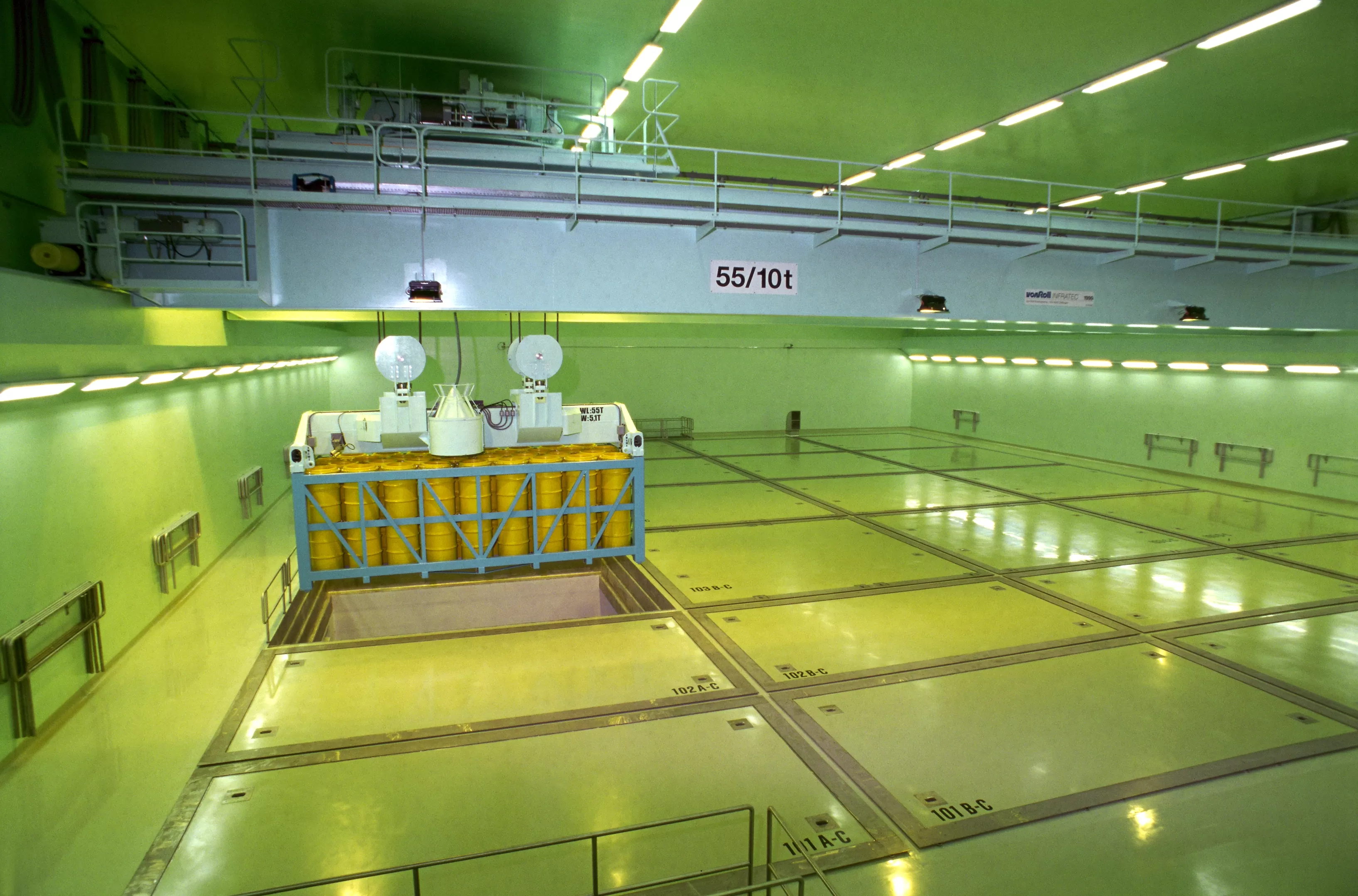
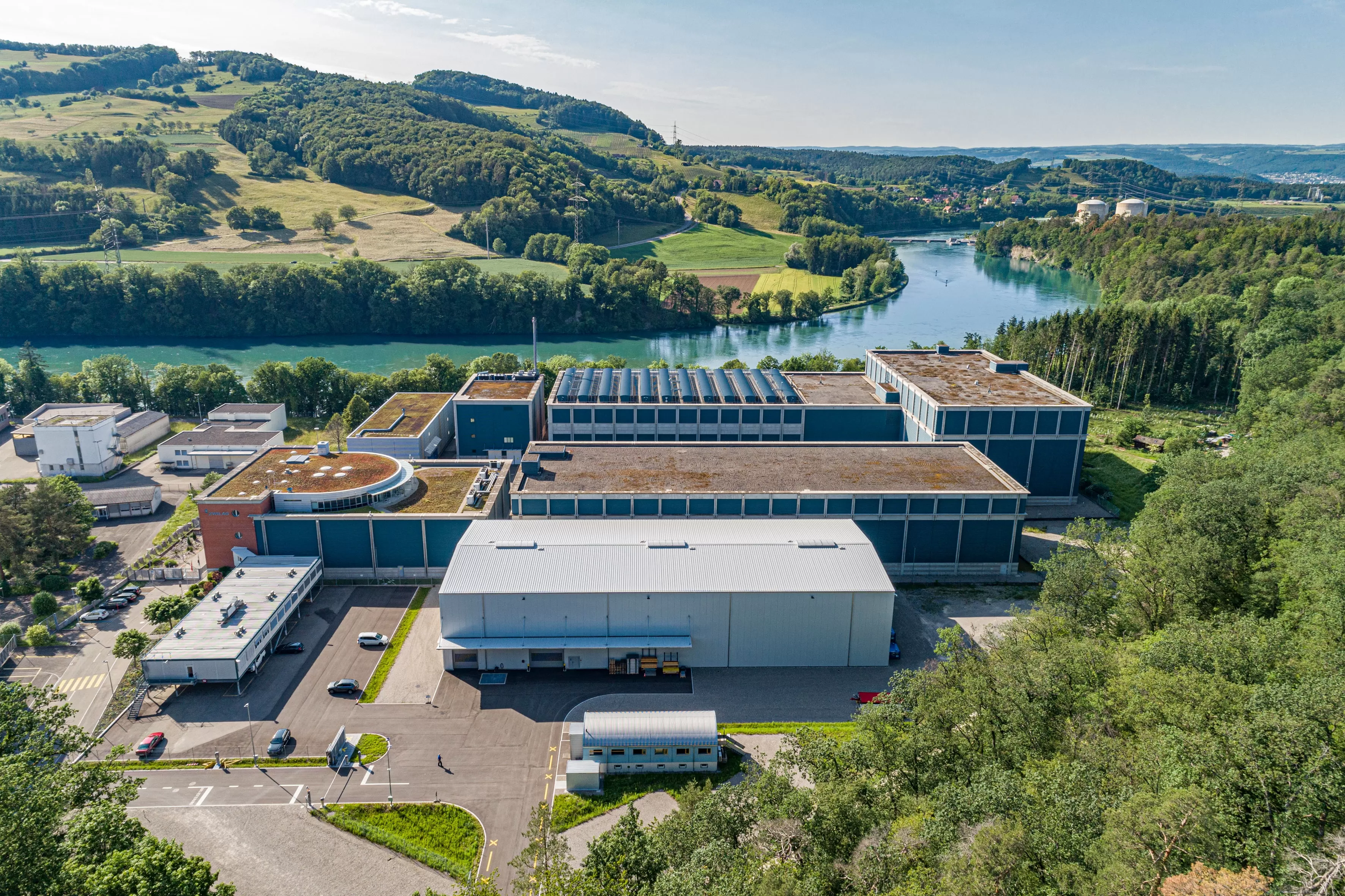
The safely secured halls of the Zwilag interim storage facility are located in Würenlingen in Canton Aargau. They provide storage capacity for transport and storage casks containing spent fuel assemblies and other high-level waste. The ZWIBEZ interim storage facility, where spent fuel assemblies and low-level waste are also held, is located on the site of the Beznau nuclear power plant. The Gösgen nuclear power plant houses a wet storage facility for spent fuel assemblies.
Once the low- and intermediate-level waste has been packaged, it is safely stored in the Zwilag interim storage facility (waste for nuclear power plants) and in the Swiss Federal Interim Storage Facility (waste from medicine, industry and research) in Würenlingen, as well as at the sites of the nuclear power plants.
Interim storage facilities provide safety and storage capacity for decades
The interim storage facilities have sufficient capacity for all wastes resulting from the operation and decommissioning of the five nuclear power plants. This applies to the currently foreseen 60-year operating period for the remaining nuclear power plants and the waste arising from the ongoing decommissioning of the Mühleberg nuclear power plant. There is also sufficient interim storage capacity for the waste arising from medicine, industry and research. In Switzerland and many other countries, interim storage facilities have proven to be highly effective for decades. They provide short- and medium-term safety but have to be monitored and maintained, and this requires a stable society.
Only an interim solution
How society evolves can neither be calculated nor predicted: no one knows whether and for how long humans would be willing and able to look after the buildings and the waste. High-level waste has to be safely enclosed for hundreds of thousands of years, which is why they cannot be held at the earth’s surface in the long term. Interim storage facilities are also – as their name implies – only an interim solution until a deep geological repository has been constructed. In this repository, the waste will be protected from glacial advances, natural hazards and human intrusion for a sufficiently long time period.
Safely packaging radioactive waste
Packaging protects the waste from external influences and prevents the dispersion of the waste. It also facilitates the safe handling of the waste packages during transport and in the interim storage facility.
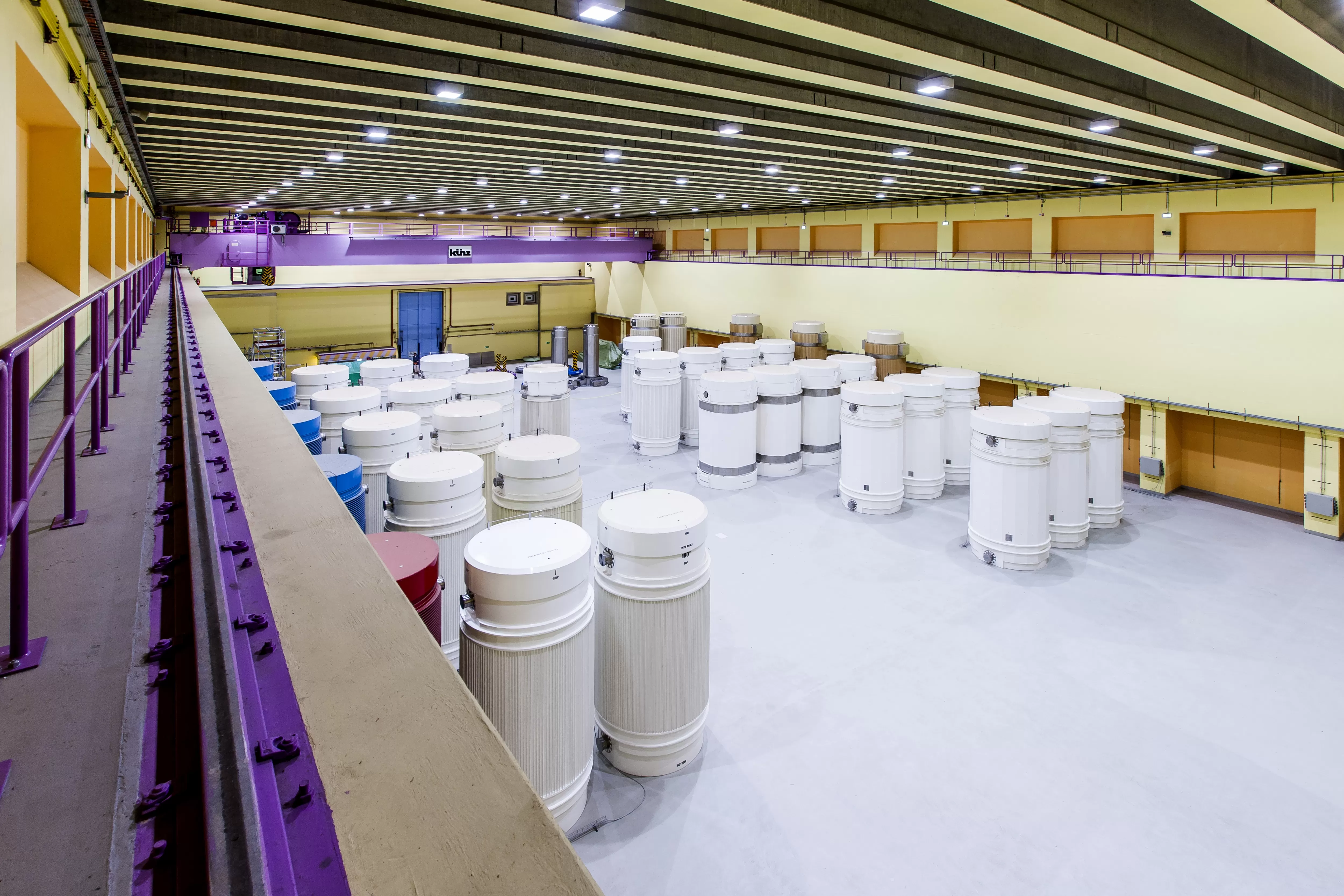
Vitrified high-level waste and spent fuel assemblies are packaged in large, thick-walled transport and storage casks. These are used to transport the waste to the interim storage facility and for storage in the halls. Immediately before emplacement in the deep geological repository, the waste is transferred from the transport and storage casks to disposal canisters. These form one of several safety barriers that are important for the long-term safety of the repository.
Steel drums are used for the transport and interim storage of low- and intermediate-level waste.
As soon as it has been produced, the waste is prepared for deep geological disposal. Liquid waste is solidified, compressible waste is compressed and combustible waste is burnt.